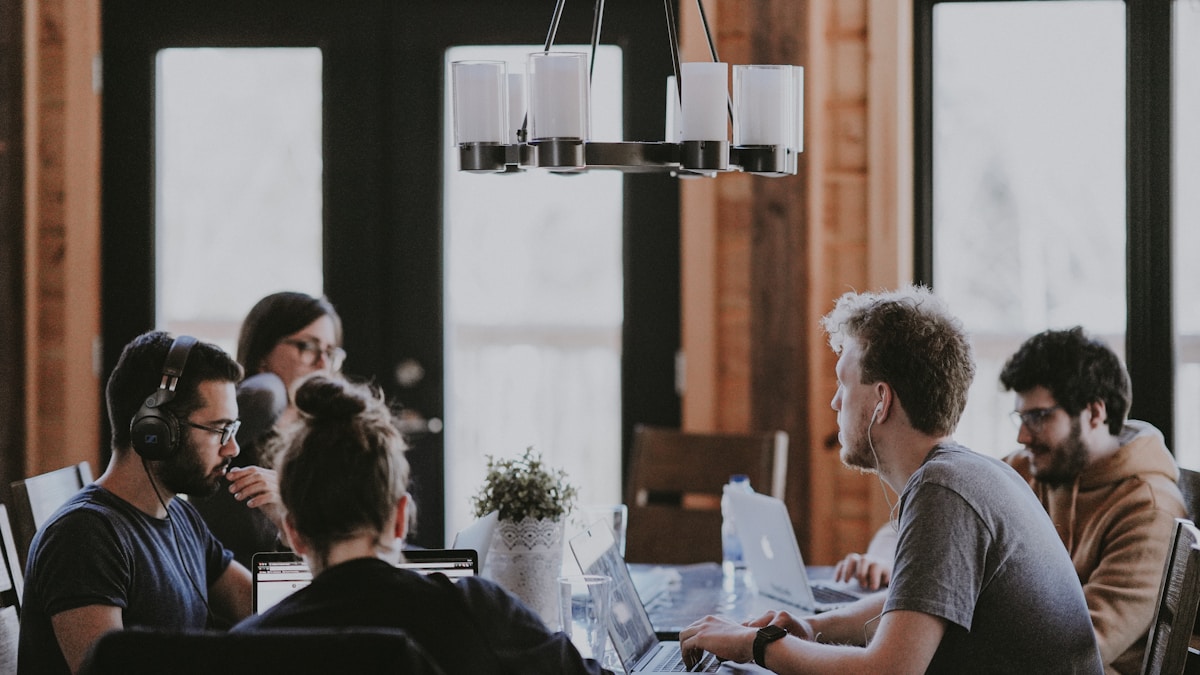

It is a Tuesday morning in Maadi and the open workspace at Blue Ocean Hub is already half full. A product designer working for a Berlin startup sits next to a young founder rehearsing her pitch for an angel round. Across the room, a corporate lawyer reviews a contract while sipping his second karkadeh of the day.
This scene barely existed in Cairo a decade ago. The city had business centres and serviced offices, but the idea of a flexible membership — with hot desks, community events, and a shared kitchen — was almost foreign. Now it is becoming the default.
What is driving the shift
Three forces are converging. First, the rise of remote work has untethered thousands of Egyptians from corporate offices. Second, Egypt's startup ecosystem has matured enough that early-stage teams of two or three need a real address — but cannot justify a full lease. Third, traditional commercial rents in Cairo's prime districts have climbed sharply, making per-desk pricing more attractive than ever.
Beyond the desk
What surprised us most is how little the conversation is about real estate. Members repeatedly told us they joined for the people. Coworking spaces have quietly become the new "third place" — somewhere between the home and the corporate office where a meaningful chunk of Cairo's white-collar economy now lives.
The next five years will decide whether this model scales beyond Cairo. Alexandria, Mansoura, and Assiut are all seeing early experiments. If they take hold, the geography of Egyptian knowledge work may finally start to decentralise.